




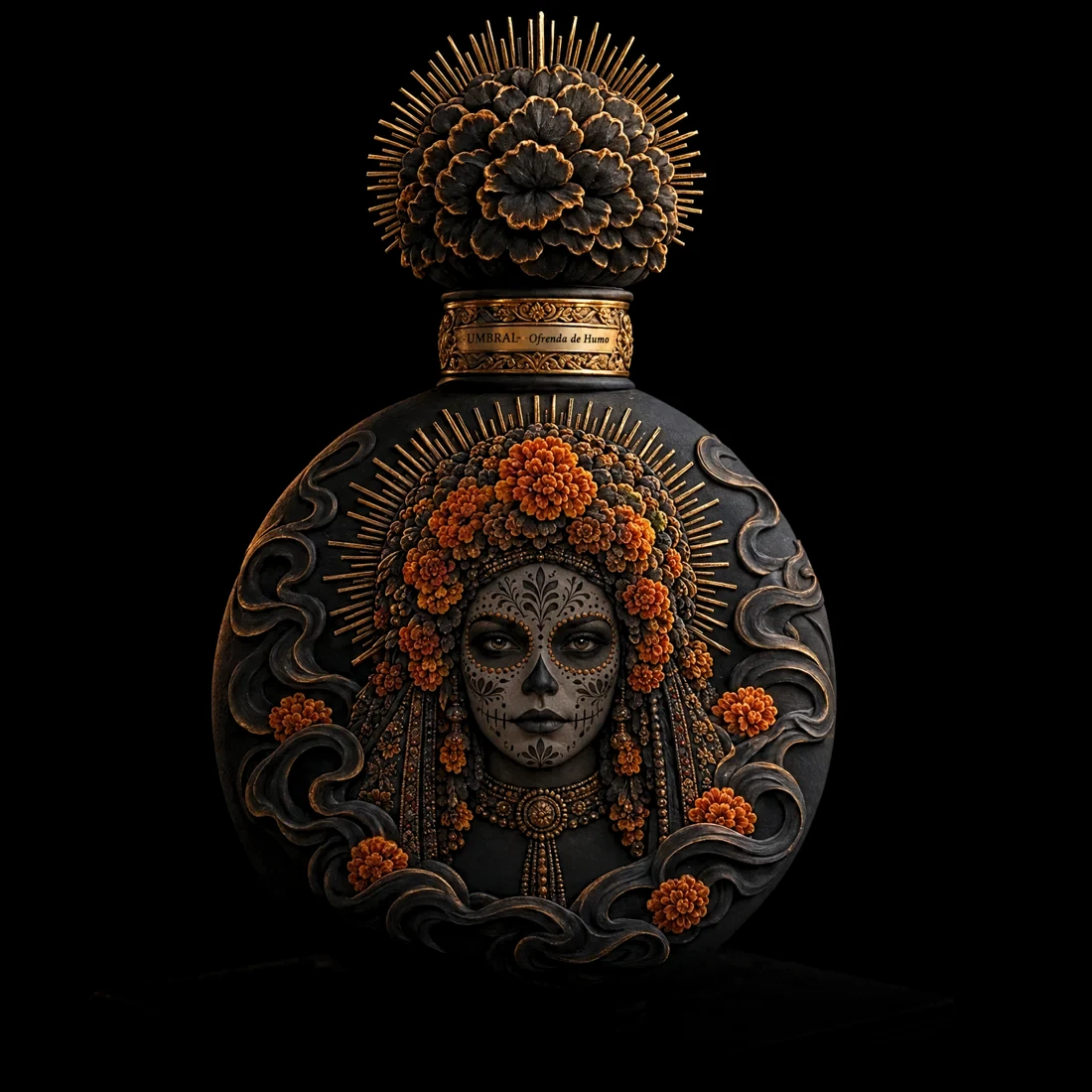
The Essences
Nine essences, in the order they unfold: their stories, not a formula.


I · The path
-
- Material
- A green, bright flicker, like crushed leaves and green apple, bitter and sweet at once.
- Origin
- The altar flower is native to Mexico. In perfume, only a trace of its cousins, or an accord.
- Transformation
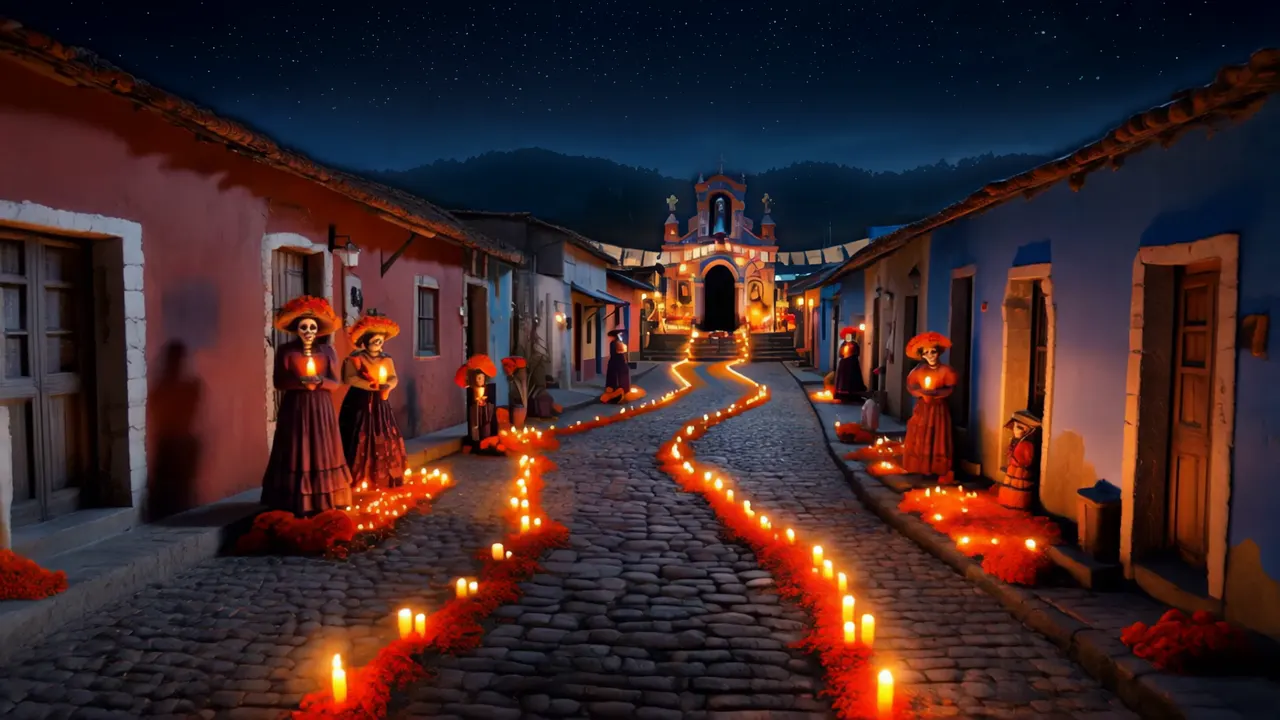
- Loose petals become a path of colour and scent, from the door to the altar.
- Meaning
- By tradition, the souls follow that scent home. Here, it opens the way.
II · The living heart
-
- Material
- A creamy white flower, heady and waxy, with a buttery warmth.
- Origin
- Born in Mexico, grown there long before the Spanish arrived. Most tuberose extract for perfume today comes from India.
- Transformation
- Great baskets of fresh flowers give only a few drops of extract. The oldest way laid the petals in fat.
- Meaning
- In Nahuatl, omixochitl, bone flower, for its shape and colour. Life, opening slowly.
-
- Material
- Lemony and creamy, a pale flower with a dry note of tea.
- Origin
- Mexico has its own magnolia. The magnolia oil in perfumery comes from white flowers of southern China and Java.
- Transformation
- The flowers are distilled with steam, though most magnolia in perfume is rebuilt as an accord.
- Meaning
- In Nahuatl, yolloxochitl, a fragrant flower shaped like a heart. Tenderness, held open.
III · The smoke and depth
-
- Material
- Pale resin that burns into a sweet white smoke, lighter than frankincense.
- Origin
- Resin of Bursera trees. In the Balsas basin, copaleros cut the bark in the rains.
- Transformation
- Distilled, copal smells bright and piney. Its smoke in a perfume is an accord.
- Meaning
- By tradition, its smoke lifts the prayer and cleans the space around the altar.
-
- Material
- Roasted beans, bitter and earthy, with a shadow of tobacco and leather.
- Origin
- Cacao for perfume is grown in West Africa and Latin America, from Ghana to Peru.
- Transformation
- The beans are fermented and roasted, and their scent is drawn out into a dark, concentrated extract.
- Meaning
- Nearly five centuries ago, Indigenous towns offered cacao for their dead in place of wine.
-
- Material
- Hard golden tears of resin, sweet and balsamic, close to vanilla and almond.
- Origin
- From Styrax trees in Laos or Sumatra. Mesoamerica had its own balsam, liquidambar, once burned with copal.
- Transformation
- The bark is scored, the resin seeps and hardens for months, then is gathered by hand.
- Meaning
- A cut in the bark closes into a sweet tear. It keeps the warmth close.
IV · What stays on the skin
-
- Material
- Cured black pods, sweet and a little powdery, the warm note of the bean.
- Origin
- An orchid native to Mexico. Today Madagascar grows the most.
- Transformation
- A yellow flower, then a pod that turns black as it is fermented and dried.
- Meaning
- In Nahuatl, tlilxochitl, black flower, for the cured pod. What darkens turns sweet.
-
- Material
- Warm, waxy and honeyed, with soft notes of hay and cured tobacco.
- Origin
- Its perfume extract comes from honeybee comb. The Maya kept stingless bees and traded their wax.
- Transformation
- Wax becomes candlelight. In Axochiapan, Morelos, it is still shaped into flowers, petal by petal.
- Meaning
- A candle lit for someone, its warmth still on your skin.
-
- Material
- Dry and warm, a little smoky, like dark leather softened by years of wear.
- Origin
- No oil comes from a hide. Every leather note in perfume is an accord.
- Transformation
- In Grasse, gloves were once perfumed. The leather trade faded, and the perfume stayed.
- Meaning
- The shape someone leaves in what they wore. A trace that stays.
